
A few loose pavers may not seem urgent in September. A small crack might not appear serious. However, water can work its way into those weak spots, freeze, expand, and create more damage once temperatures drop.
Before the first hard freeze, walk around your patio and check these seven areas.
Look for Loose or Shifting Pavers
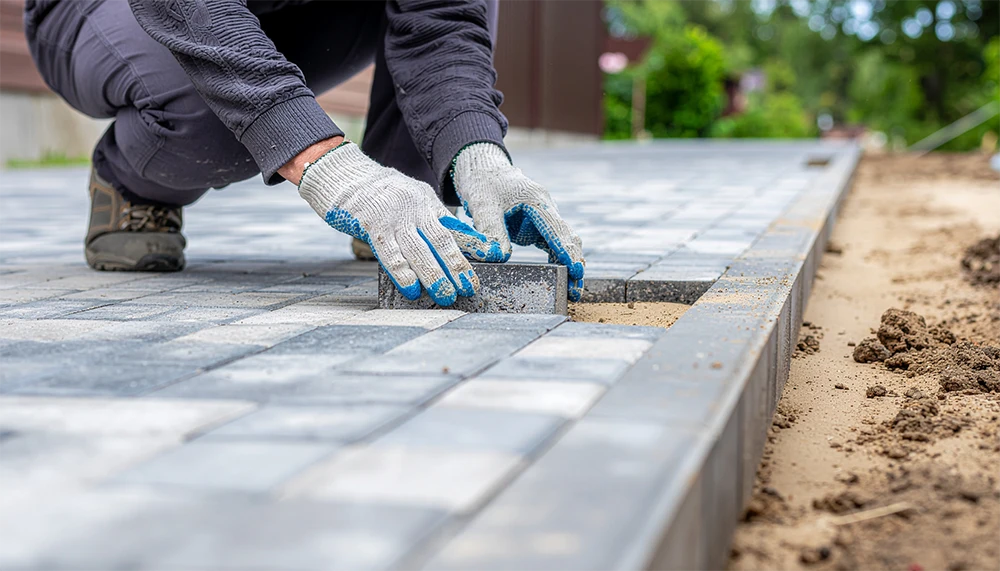
Brick pavers should sit firmly and create an even surface. If some have started moving, sinking, or rocking under your feet, there is probably an issue beneath the surface.
Pavers can shift when the base material settles or when water gets underneath the installation. Poor drainage can make the problem worse by repeatedly saturating the soil below.
Winter adds another layer of stress. Water that gets into the gaps and freezes can push surrounding pavers farther out of position.
Loose pavers are often repairable without replacing the entire patio. A professional can remove the affected section, correct the underlying problem, and reset the pavers properly.
Check Concrete for Cracks
Concrete patios naturally experience some wear over time, but cracks deserve attention before winter arrives.
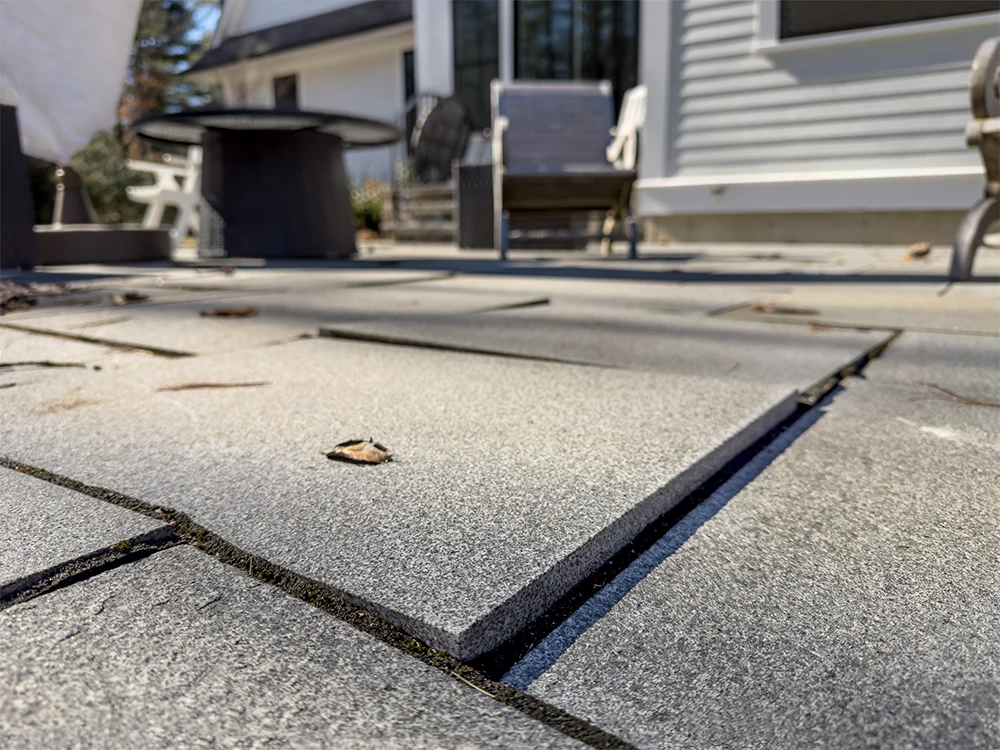
Pay particular attention to cracks that are widening, branching out, or allowing water to collect. Surface-level imperfections may not require major work, while larger or growing cracks can indicate movement or drainage problems.
Once water enters a crack, Michigan’s freeze-thaw cycles can make the opening larger. The water freezes, expands, and puts pressure on the surrounding concrete. After enough cycles, that pressure can cause additional cracking or deterioration.
If you’re trying to prepare your patio for winter, repairing significant concrete damage before freezing temperatures arrive can help prevent the problem from spreading.
Watch for Low or Uneven Areas
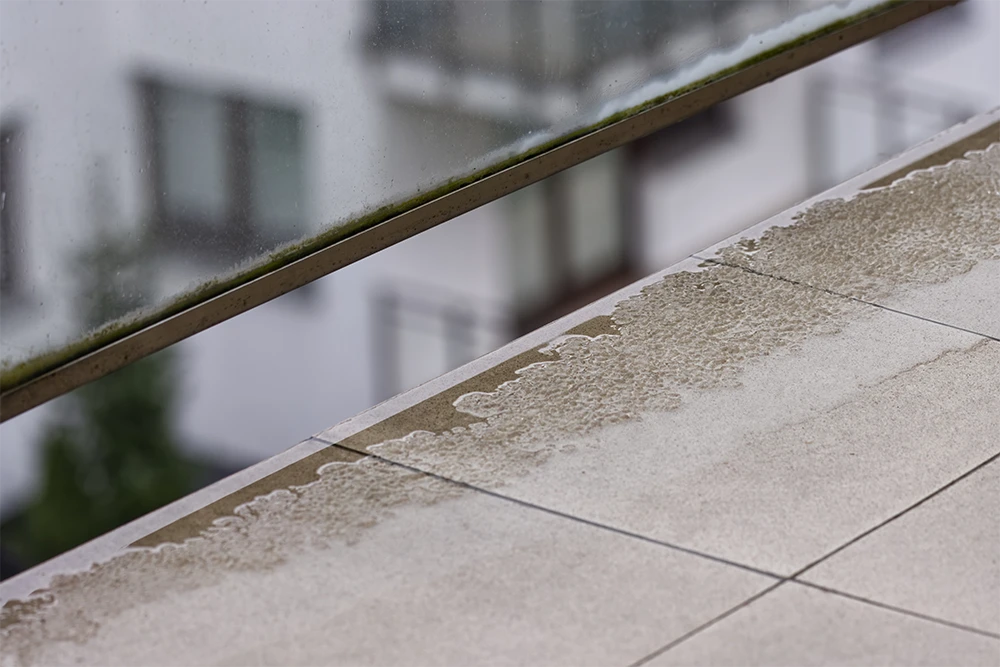
Take a look at your patio after it rains. Does water drain away normally, or does it sit in the same spot?
Standing water is a warning sign, especially when it appears near cracks, joints, or settled pavers. A patio that has developed low spots may have experienced settling beneath the surface.
Those areas can become especially troublesome during winter. Water collects, freezes, and expands instead of draining away. Over time, repeated freezing and thawing can cause more movement and deterioration.
Correcting the underlying issue is usually more effective than simply filling a low spot or making a cosmetic repair.
Inspect the Joints Between Pavers
The material between brick pavers does more than make the installation look finished. Properly maintained joints help keep the pavers locked in place and limit the amount of water that can work beneath the surface.
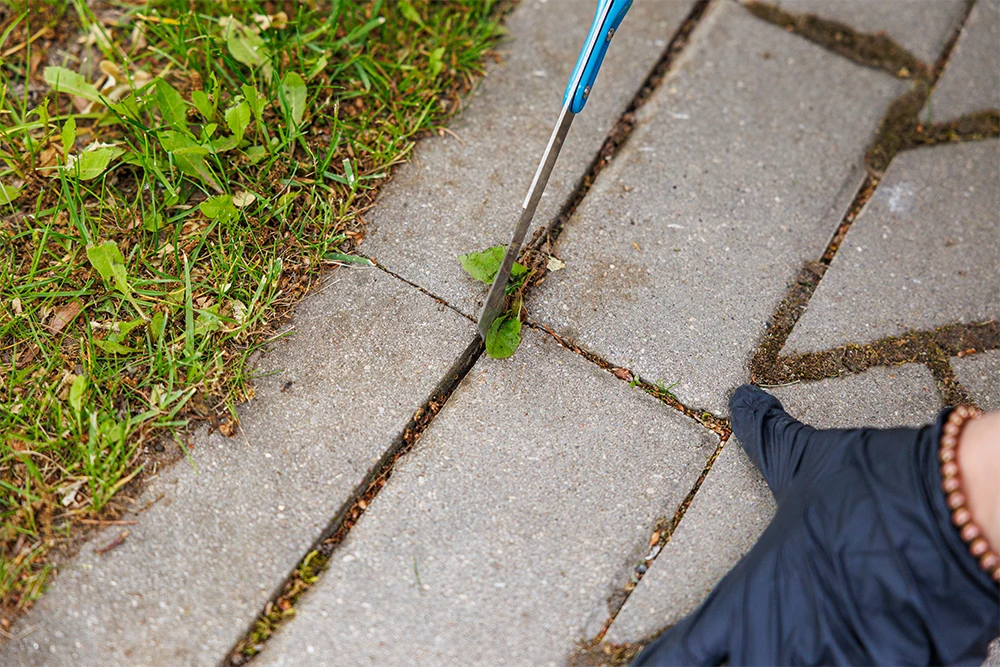
Check for areas where joint material has washed away or where weeds and grass are growing between the pavers. Excessive weed growth can indicate that the joints need attention.
This is also a good time to look for sections where the pavers have started spreading apart. Once the joints become compromised, individual pavers can move more easily.
A professional paver restoration can address joint problems along with cleaning, weed removal, repairs, and sealing when appropriate.
Check Your Patio’s Drainage
Good drainage is one of the most important parts of protecting a patio through a Michigan winter.
Water should have a clear path away from the patio rather than collecting against the house, retaining walls, steps, or other structures. Check nearby downspouts as well. A downspout that releases a large amount of water directly onto your patio can contribute to erosion, settling, and surface damage.
Leaves and debris can also block drainage paths during the fall. Clearing them away is a simple step that can make a difference.
If water consistently pools in one area even after you clear the surface, the problem may involve the slope or base beneath the patio.
Look for Surface Deterioration
Walk across the entire patio and look closely at the surface. With concrete, watch for areas that are flaking, chipping, or becoming rougher than the surrounding surface.
Pavers should also be checked for cracked, broken, or badly worn pieces. A single damaged paver is usually a much easier problem to address than a larger section that has been allowed to deteriorate.
Concrete overlays, sealers, and other restoration options may also be appropriate depending on the condition of the existing surface.
The important thing is to identify deterioration before winter moisture has a chance to get into the damaged areas.
Don’t Ignore Problems That Have Been Getting Worse
One of the easiest ways to spot a patio problem is to think back to how it looked last spring. Was one section slightly uneven? Has that crack grown? Are more pavers moving than before? Does water now collect somewhere it didn’t previously? Changes over time matter.
A patio doesn’t necessarily need a complete replacement just because it has some damage. In many cases, targeted repairs can address the areas that are failing while preserving the portions that are still in good condition.
That is why an inspection can be worthwhile before making a decision. A professional can determine whether the problem involves the surface, joints, drainage, settling, or the base underneath.
How to Prepare Your Patio for Winter
The best winter preparation starts with fixing problems rather than simply covering them up.
If your patio has loose pavers, damaged joints, significant cracks, settling, or drainage problems, fall is a good time to have the condition evaluated. Addressing those issues before the ground freezes gives you a better chance of preventing additional damage over the winter.
N&M Restoration provides patio repair and paver restoration throughout Metro Detroit. Our team can evaluate damaged patios, identify problem areas, and recommend the appropriate repair instead of automatically pushing for a complete replacement.
Whether you have a brick paver patio that has shifted or a concrete patio that has started cracking, taking care of the problem now can make spring cleanup much easier.
Don’t wait until spring to find out what winter did to your patio. Contact N&M Restoration for a free estimate and get your patio ready before the freeze.