Give Your Chimney a Look Before You Light the First Fire
Michigan weather puts a lot of stress on brick and mortar. Rain, snow, freezing temperatures, and repeated freeze-thaw cycles can gradually weaken a chimney. Small cracks can become larger openings. Loose mortar can allow water inside. A damaged cap or crown can leave the entire chimney exposed to moisture.
The good news is that many chimney problems are easy to spot when you know what to look for. Checking your chimney before fireplace season gives you an opportunity to address minor issues before winter makes them worse.
Here are seven things worth checking now.
Look for Cracked or Deteriorating Mortar
Start by looking closely at the mortar joints between the bricks. Healthy mortar should remain solid and intact. If you notice cracks, crumbling sections, or areas where mortar has started falling away, your chimney may need repairs.
Mortar naturally wears down over time. Michigan’s weather can speed up that process, especially when moisture gets into small cracks and freezes.
As water freezes, it expands inside the masonry. When temperatures rise, the ice melts and the material contracts again. Repeating this process can gradually widen cracks and weaken the joints.
Small areas of mortar deterioration can often be addressed through tuckpointing or repointing. The damaged material is removed and replaced with new mortar, helping restore the strength and weather resistance of the chimney.
Taking care of deteriorating mortar now can also help prevent moisture from reaching the interior of the chimney.
Check for Loose, Cracked, or Damaged Bricks
Mortar is not the only part of the chimney that can deteriorate. Individual bricks can also become damaged after years of exposure.
Look for bricks that are cracked, chipped, loose, or beginning to flake apart. Pay particular attention to areas around the top of the chimney, where weather exposure tends to be strongest.
Brick damage can allow more moisture into the masonry. Once water gets inside, winter temperatures can make the problem significantly worse.
A few damaged bricks do not necessarily mean the entire chimney needs to be rebuilt. In many cases, individual bricks can be removed and replaced before the surrounding masonry is affected.
If you notice something that looks unusual, it is better to have it evaluated before assuming the damage is only cosmetic.
Inspect the Chimney Crown
The chimney crown sits at the top of the chimney and plays an important role in keeping water away from the masonry below.
Take a look at the crown for visible cracks, deterioration, or areas where water could collect. Even small cracks can create an entry point for moisture.
Once water gets into those openings, Michigan’s freeze-thaw cycles can make the damage worse. The crown may continue cracking while moisture reaches the bricks and mortar underneath.
A damaged crown can eventually lead to much more extensive chimney repairs. Addressing the problem early helps protect the rest of the structure.
If you cannot safely inspect the crown from the ground, do not climb onto your roof just to get a closer look. A professional inspection is a much safer way to determine its condition.
Make Sure the Chimney Cap Is in Good Shape
Your chimney cap helps keep rain, snow, leaves, and debris from entering the chimney. If the cap is missing, damaged, loose, or improperly fitted, your chimney may be exposed to unnecessary moisture.
Look at the cap from the ground and check for obvious signs of damage or movement. You may also notice rust, missing sections, or other deterioration depending on the type of cap installed.
A damaged chimney cap does more than create a maintenance issue. It can allow water to enter the chimney and contribute to deterioration of the surrounding masonry.
Replacing or repairing a damaged cap can be a relatively simple way to protect a much larger structure.
Watch for Signs of Water Damage
Water damage is one of the biggest concerns when it comes to chimney maintenance.
Look for white staining on the bricks, dark discoloration, crumbling mortar, or areas where the brick surface appears to be flaking. White powdery deposits are known as efflorescence. They can occur when moisture moves through masonry and leaves mineral deposits behind.
Spalling is another warning sign. This happens when the face of a brick begins to chip, flake, or break away. Trapped moisture and repeated freezing can contribute to this type of deterioration.
These problems should not be treated as simple cosmetic issues. They can indicate that moisture is getting into the masonry and creating damage from within.
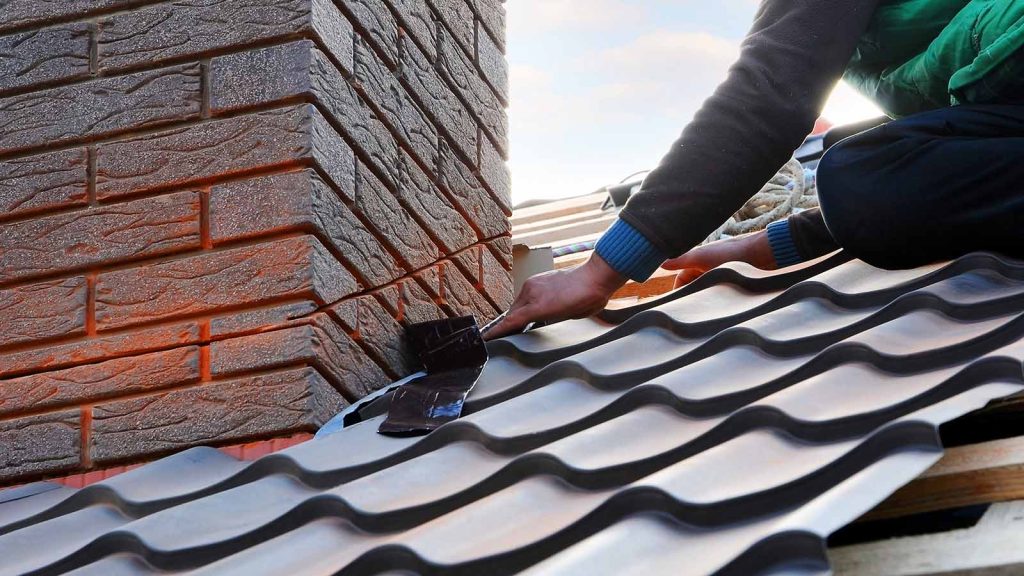
Check the Flashing Around the Chimney
The area where your chimney meets the roof deserves attention, too.
Flashing helps direct water away from the joint between the chimney and roof. If the flashing becomes damaged or begins allowing water through, moisture can make its way into your home.
Look for visible gaps, damaged metal, or signs of water staining around the chimney inside your attic or upper floors. Interior staining can sometimes point to an exterior problem that is not obvious from the ground.
Because flashing is part of your roof system, problems in this area should be evaluated carefully. Fixing the source of the leak is important for protecting both your chimney and the interior of your home.
Look for Signs That the Chimney Has Shifted
Finally, step back and look at the chimney as a whole.
Does it appear straight? Are there areas where bricks no longer line up properly? Do you notice a section that looks like it is leaning or pulling away from the rest of the structure?
Movement can indicate a more serious masonry or structural problem. It may be related to deterioration, moisture, foundation movement, or other issues that require professional evaluation.
A chimney does not have to be dramatically leaning before it deserves attention. Small changes can be easier and less expensive to address than major structural movement.
If something about the chimney looks different from previous years, it is worth having a professional take a closer look.
Why Fall Is a Smart Time to Check Your Chimney
Waiting until the middle of winter to discover a chimney problem is never ideal. Cold temperatures, snow, and ice can make repairs more difficult while giving existing masonry damage plenty of time to worsen.
Fall gives homeowners a chance to identify problems while the weather is still workable. It also gives you time to complete repairs before you start relying on your fireplace regularly.
N&M Restoration provides chimney repair and restoration services throughout Metro Detroit. Our work includes tuckpointing, brick replacement, chimney crown and cap repairs, and waterproofing designed to protect masonry from Michigan weather.
A professional evaluation can help determine whether your chimney needs a simple repair or more extensive restoration. The goal is to catch problems while they are still manageable.
Get Your Chimney Ready Before Winter
Your chimney spends every winter exposed to some of the harshest conditions your home experiences. A little attention before fireplace season can go a long way toward protecting it.
If you find cracked mortar, damaged bricks, water staining, a deteriorating crown, or problems with the chimney cap, do not wait until winter to address them.
N&M Restoration can evaluate your chimney, identify problem areas, and recommend the right repair for your home. Getting the work done before freezing weather arrives can help protect your masonry and prevent small problems from becoming major repairs.