
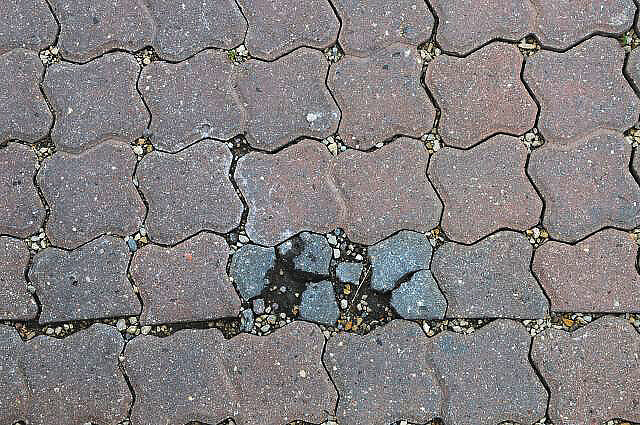
What Is a Freeze-Thaw Cycle?
A freeze-thaw cycle occurs when temperatures rise above freezing during the day and drop below freezing at night. Snow and ice melt, water seeps into small gaps, and then that water freezes again. When water freezes, it expands.
This expansion puts pressure on the surrounding materials. Over time, repeated cycles of freezing and thawing can cause movement beneath your brick pavers, leading to shifting, settling, or uneven surfaces.
Michigan experiences many freeze-thaw cycles each winter, which is why proper paver installation and drainage are so important in this region.
How Freeze-Thaw Cycles Affect Brick Pavers
Brick pavers themselves are designed to handle cold temperatures, but the real issue often lies beneath the surface. If water becomes trapped in the base material or soil below the pavers, freezing temperatures can cause that material to expand and push pavers upward.
As the ground thaws, the base can settle unevenly. This movement may result in pavers that sink, tilt, or separate over time. You might notice uneven spots, pooling water, or gaps between pavers once winter ends.
In some cases, freeze-thaw cycles can also weaken joint sand, allowing weeds to grow and making pavers more likely to shift during future seasons.
Common Signs of Freeze-Thaw Damage
Homeowners often notice freeze-thaw damage in early spring. Some of the most common signs include uneven pavers, low spots where water collects, and edges that appear raised or sunken.
You may also see cracked or missing joint sand, loose pavers, or sections that no longer feel stable underfoot. These issues tend to worsen if they are not addressed, especially as water continues to find its way into problem areas.
Catching these signs early can prevent more extensive repairs later.
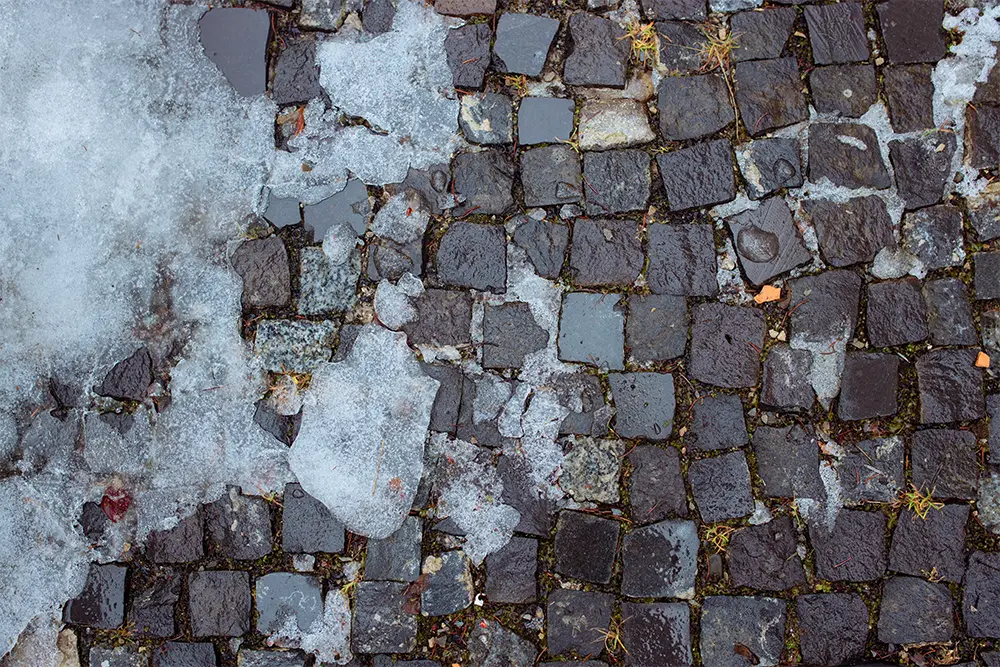
Why Proper Installation Makes a Difference
The best protection against freeze-thaw damage starts with proper installation. Brick pavers rely on a well-prepared base that allows water to drain away instead of becoming trapped.
A compacted gravel base, proper grading, and correct edge restraints all play a role in keeping pavers stable through seasonal changes. When shortcuts are taken during installation, freeze-thaw cycles tend to expose those weaknesses quickly.
Professional installation ensures the base is built to handle Michigan’s climate and ground conditions.
The Role of Drainage in Preventing Damage
Water is the main contributor to freeze-thaw problems. If water cannot drain properly, it will collect beneath or between pavers and expand when frozen.
Good drainage directs water away from paved areas and prevents it from sitting beneath the surface. This includes proper slope, base materials that allow drainage, and maintaining clear joints between pavers.
Without proper drainage, even well-made pavers can shift or settle over time.
How Sealing Helps Protect Brick Pavers
Sealing brick pavers adds an extra layer of protection against moisture. A quality sealer helps reduce water absorption and protects joint sand from erosion.
While sealing does not eliminate freeze-thaw cycles, it helps limit the amount of moisture that can penetrate the surface. This can reduce the risk of shifting, weed growth, and joint deterioration.
Sealing should be done correctly and reapplied as needed to maintain its effectiveness.
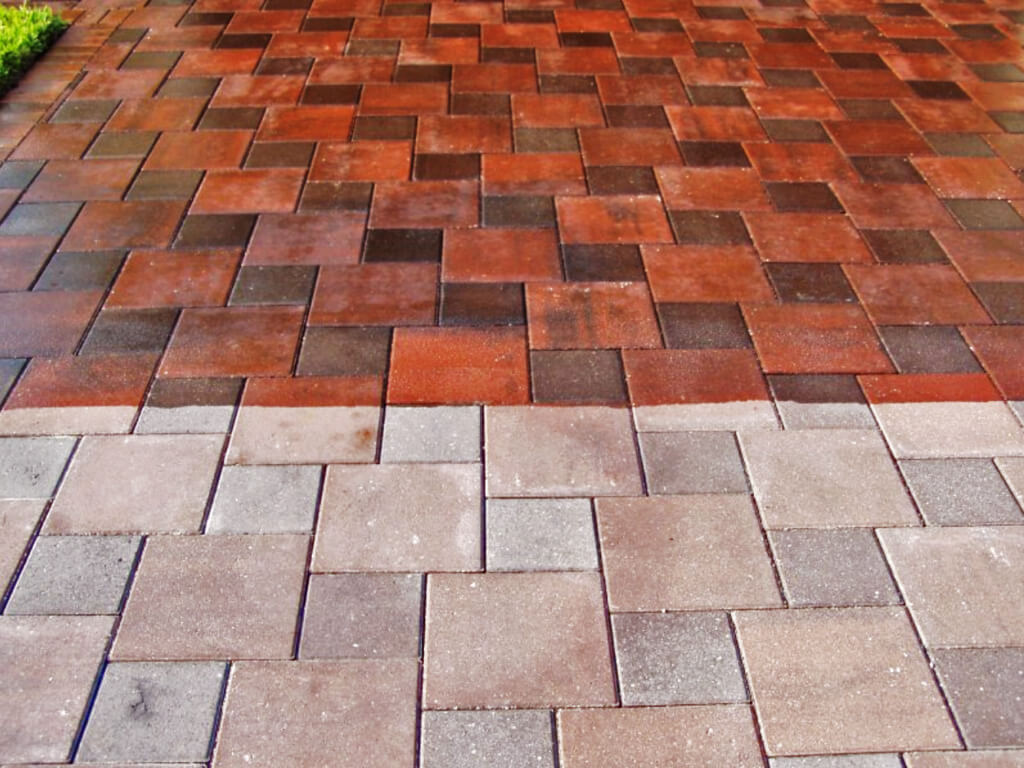
When Repairs Are Necessary
If freeze-thaw damage has already occurred, repairs may be needed to restore the surface. This can involve lifting and resetting pavers, correcting the base, and replacing joint sand.
Addressing these issues early helps prevent further movement and extends the life of your brick paver installation. Ignoring uneven areas or drainage problems often leads to more extensive repairs later.
Protecting Your Brick Pavers Long-Term
Brick pavers can perform well in Michigan’s climate when installed and maintained properly. Preventing freeze-thaw damage starts with good installation practices and continues with regular maintenance.
Keeping joints filled, managing drainage, and addressing small issues early can help your pavers remain stable and attractive year after year.
At N&M Restoration, we design and install brick paver systems with Michigan’s weather in mind. Our goal is to create outdoor surfaces that not only look great but also stand up to seasonal challenges without constant repairs.
If you are concerned about freeze-thaw damage or want to protect an existing paver surface, a professional evaluation can help you understand the best next steps.