


However, not all garage flooring surfaces handle these conditions the same way.
Bare concrete is strong, but it is also porous. Ordinary floor paint can improve its appearance, but it doesn’t provide the same type of bond or protection as a professionally installed epoxy coating. Understanding these differences can help you choose a flooring system that makes sense for your garage.
Here’s what happens to garage floors over time, why epoxy performs differently, and what homeowners should know before choosing a coating.
Why Garage Floors Experience So Much Wear
Unlike many other floors in your home, a garage floor has to handle several types of stress at once.
Vehicles introduce weight, friction, and temperature changes. Tires can carry road salt, water, sand, and small stones into the garage. Meanwhile, everyday projects can expose the surface to oil, grease, cleaning products, and other substances.
Michigan winters add another challenge. Snow and ice melt as vehicles enter the garage, leaving water and road salt behind. These materials can accumulate across the floor, especially near parking areas and entry points.
Concrete handles substantial weight, but repeated exposure can affect its surface. Depending on the condition and composition of the slab, homeowners may eventually notice:
- Dark stains from oil and automotive fluids.
- Fine concrete dust accumulating on the floor.
- Surface discoloration from road salt and other contaminants.
- Small chips and areas of surface deterioration.
- Stubborn marks that remain after routine cleaning.
These problems don’t necessarily mean the concrete has failed. However, they can make the garage harder to maintain and less attractive as an everyday workspace.
Why Bare Concrete Is Difficult to Maintain
Concrete is naturally porous. Although it appears solid and smooth, the material contains a network of small pores that can absorb liquids. This is one reason oil stains and other spills can become difficult to remove. When a substance penetrates the surface, ordinary sweeping and mopping may not be enough to eliminate the discoloration.
Concrete can also develop surface dusting. This occurs when the upper layer gradually breaks down, leaving fine particles behind. Dust can accumulate on stored items, tools, vehicles, and anything else kept near the floor. Another issue is that concrete does not always respond well to repeated exposure to moisture and contaminants. Road salt, chemical spills, and general wear can contribute to surface deterioration over time.
Regular cleaning helps, but it doesn’t change the porous nature of untreated concrete. For homeowners who use their garages as workshops, storage areas, or multipurpose spaces, these limitations can become increasingly frustrating.g.
What Makes Epoxy Different From Ordinary Floor Paint?
Epoxy and ordinary concrete floor paint may look similar after application, but they work differently. Most conventional floor paints rely on a coating that adheres to the surface. While some products offer useful protection, their performance depends heavily on the product formulation, preparation, and application.
Epoxy is a two-component coating system. It combines epoxy resin with a hardener, creating a chemical reaction that produces a hard, bonded surface. This distinction matters because properly installed epoxy forms a coating designed to adhere to prepared concrete rather than simply sitting on top like ordinary paint. The resulting surface offers several practical advantages:
- A protective barrier: Epoxy helps reduce direct exposure of the concrete to many common garage contaminants.
- Improved stain resistance: Its less porous surface makes many oil and automotive fluid spills easier to clean when addressed promptly.
- Abrasion resistance: A properly selected coating can withstand routine foot traffic and everyday garage activity.
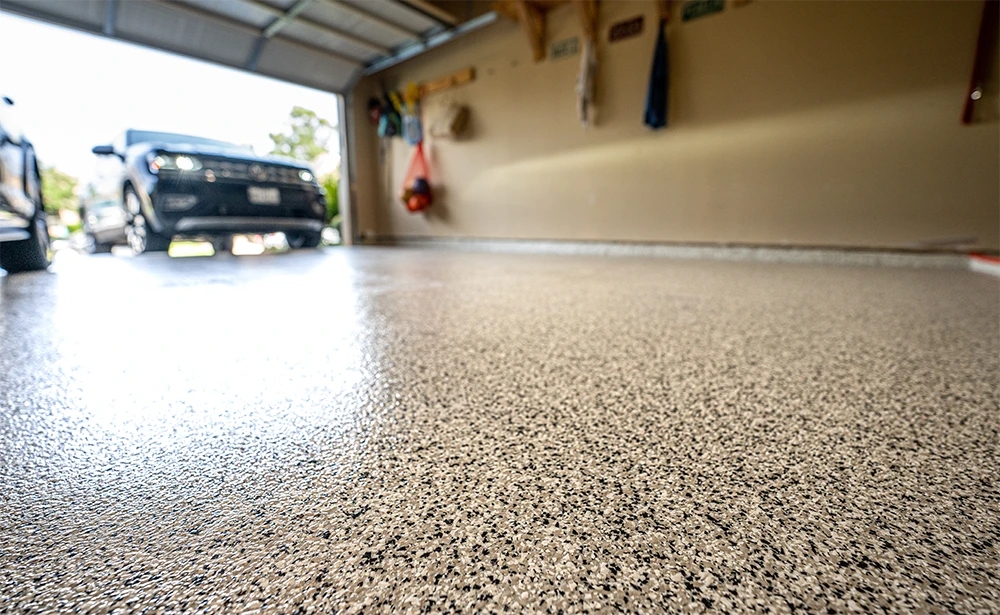
- Design flexibility: Different colors, decorative flakes, and finishes allow homeowners to customize the appearance of the floor.
However, epoxy isn’t indestructible. Heavy impacts, sharp objects, harsh chemicals, and improper installation can still cause damage. The coating system must also be appropriate for the conditions and intended use of the garage.
What Happens When You Install Epoxy Over Concrete?
A successful epoxy floor begins long before the coating is applied. Surface preparation is one of the most important parts of the installation process. Even high-quality materials can fail when the concrete underneath isn’t properly prepared.
Here’s what the process generally involves.
1. Evaluating the Existing Concrete
Before installation, the condition of the concrete needs to be assessed.
The installer should look for cracks, surface deterioration, previous coatings, contamination, and signs of moisture. These conditions can influence which preparation methods and coating system are appropriate.
Moisture deserves particular attention. Water vapor moving through a concrete slab can interfere with coating adhesion and contribute to bubbling or peeling.
If the garage has an existing moisture problem, that issue should be evaluated before applying a coating.
2. Preparing the Surface
The concrete must be clean and properly prepared so the epoxy can bond.
Professional preparation often involves mechanical grinding or other suitable methods to remove surface contaminants and create the appropriate concrete profile.
This step also helps remove weak surface material and existing coatings that could interfere with adhesion. Simply sweeping or washing the floor is not enough for many professional epoxy systems.
3. Addressing Cracks and Surface Imperfections
Once the floor has been prepared, cracks and other imperfections can be evaluated. Depending on their condition, certain cracks may require filling or other treatment before coating. However, not every crack can be addressed with a simple surface repair. Active movement or structural concerns may require further evaluation.
The goal is to create a suitable surface for the coating system.
4. Applying the Epoxy System
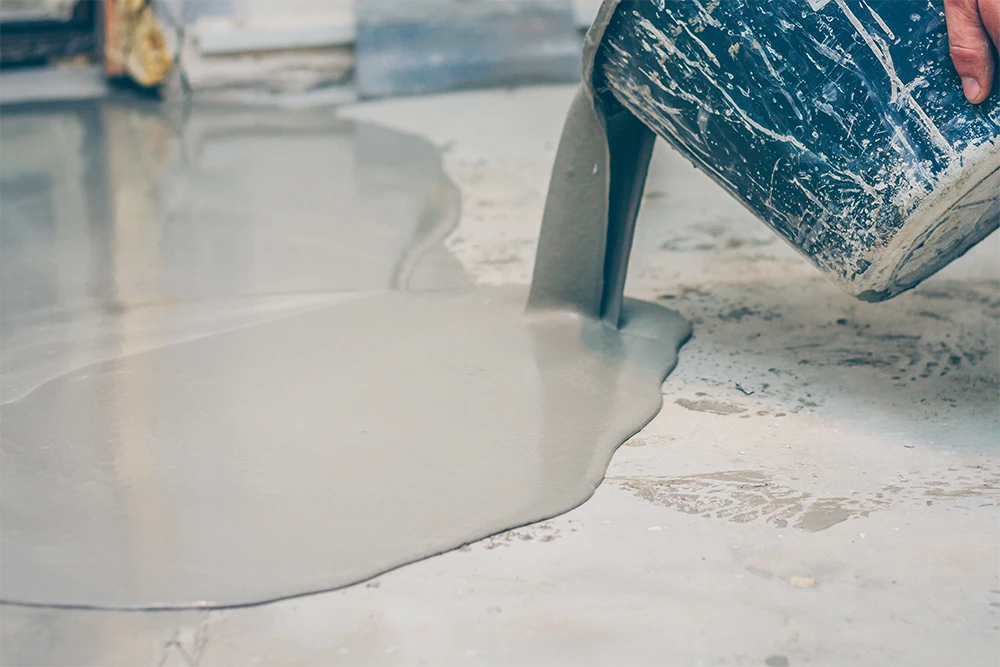
After preparation, the epoxy components are mixed and applied according to the manufacturer’s specifications. The installer must pay attention to mixing ratios, working time, coverage, and environmental conditions. Temperature and humidity can affect how the material cures. Depending on the selected system, decorative flakes or additional coating layers may also be incorporated.
Once the installation is complete, the floor needs adequate curing time before vehicles and heavy items are returned to the garage.
How to Maintain an Epoxy Garage Floor
One of the biggest advantages of epoxy flooring is that routine maintenance is relatively straightforward.
The surface doesn’t require the same level of effort as untreated concrete when dealing with many common garage messes. However, regular care still matters.
A few simple habits can help keep the coating looking good:
- Sweep regularly: Remove dirt, sand, and small debris before they accumulate.
- Clean spills promptly: Wipe up oil, automotive fluids, and other substances rather than allowing them to sit.
- Use appropriate cleaners: Follow the coating manufacturer’s recommendations for cleaning products.
- Avoid abrasive tools: Harsh scrubbing materials can damage certain finishes.
- Manage winter residue: Clean away road salt and melting snow before buildup becomes difficult to remove.
- Use protective pads: Consider pads beneath heavy equipment or objects that could scratch the surface.
It’s also worth avoiding unnecessary dragging of heavy equipment across the floor. Although epoxy coatings are designed for durability, sharp edges and concentrated impacts can still cause damage.
With consistent care, homeowners can maintain the appearance and performance of their garage floor without complicated cleaning routines.
When Epoxy Might Not Be the Right Solution
Epoxy flooring works well for many garages, but it isn’t suitable for every concrete surface. The condition of the existing slab plays a major role in determining whether a coating is appropriate. For example, concrete with significant deterioration may require additional work before installation. Moisture problems can also create challenges because water vapor moving through the slab may affect the coating’s ability to bond. There are also situations where the garage’s intended use calls for a different flooring solution.
Before choosing epoxy, consider these factors:
- Moisture problems: Persistent moisture or water intrusion should be evaluated before applying a coating.
- Severely damaged concrete: Extensive deterioration may require more than basic surface preparation.
- Existing coatings: Old paint, sealers, or other materials may need to be removed to achieve proper adhesion.
- Intended use: Heavy industrial activity or exposure to specialized chemicals may require a different coating system.
A professional evaluation can help determine whether epoxy is appropriate and what preparation the floor needs.
Choosing the Right Epoxy Floor for Your Garage
Once you’ve determined that your concrete is suitable for coating, the next decision is choosing the right system and finish. Some homeowners prefer a simple, solid-color floor. Others want decorative flakes that add texture and visual interest. There are also different considerations when selecting a finish. A garage used primarily for parking may have different requirements than a workshop where tools, equipment, and materials are regularly moved across the floor.
Think about how you use the space, how much maintenance you’re comfortable with, and what appearance you want to achieve.
N&M Restoration offers epoxy flooring for residential and commercial applications, with a variety of colors and design options. Professional installation helps ensure the existing concrete is properly evaluated and prepared for the selected coating system.
Rather than treating the garage floor as an afterthought, you can make it a functional part of the overall space.
Give Your Garage Floor a Better Foundation
Your garage floor handles constant activity, changing temperatures, moisture, and everyday messes. While bare concrete can withstand considerable weight, its porous surface can make cleaning and maintenance difficult.
Epoxy flooring provides another option. By creating a protective coating over properly prepared concrete, it can help reduce staining, simplify routine cleaning, and give the garage a more finished appearance.
The key is choosing the right system and making sure the existing concrete is ready for installation.
Ready to upgrade your garage floor? N&M Restoration provides professional epoxy flooring throughout Metro Detroit. Visit our epoxy flooring service page to explore available options, or contact our team to schedule a free estimate.